 Partners for Collaborative Solutions
PATHWAYS TO SOLUTIONS WITH SELF-DESTRUCTIVE ADOLESCENTS: A COLLABORATIVE STRENGTHS-BASED BRIEF THERAPY APPROACH
In today’s highly toxic digital era of extremes, economic upheaval, and high stress, we are seeing increasingly more adolescents in our practice settings presenting with multiple self-destructive behaviors like self-injury combined with substance abuse, bingeing and purging or overeating, and excessive Internet use, for violent on and offline gaming and gambling, and cyber-sex, all or in any combination can contribute to their experiencing serious psychological, physical, family, school performance consequences. However, since these self-destructive habits are emotionally and physically rewarding and serve many functions for adolescents, they will protect their habits at all costs, making it quite difficult for us to engage and retain them in treatment.
To further complicate matters, these high-risk youth attract multiple helping professionals from larger systems like a magnet. Often, these helping professionals not only do not regularly communicate with one another but they may not see eye-to-eye regarding problem views, the best treatment methods to pursue, and may end up establishing highly unrealistic treatment goals and expectations that are unattainable for these high risk youth and their families to achieve. Thus, family-helping systems knots develop, which further perpetuates the adolescent’s difficulties.
In this hands-on, practice-oriented two-day institute, participants will learn a collaborative eco-systemic approach that targets interventions at the adolescent, family, social network, and larger systems levels. The clinical implications of the latest research on adolescent self-destructive behaviors will be discussed. As a result of attending this workshop, participants will be able to apply the following skills with their most challenging clients:
- Use research-informed effective strategies for engaging and retaining in treatment self-destructive adolescents and their families
- Use important findings from self-change and quitting styles research for alliance-building and to match what we do therapeutically with the unique needs and characteristics of our clients
- Understand the key brain systems involved, the neurochemistry of self-destructive habits, and the self-destructive maintenance loop
- Determine with adolescents the unique meanings of their self-destructive habits and the multiple functions they serve
- Use the blueprint for change plan with adolescents and their families to identify their key strengths, past successes, establish realistic goals, determine at what systems levels to target interventions and what key resource people from their social networks and helping professionals to collaborate with and include in future sessions
- Use mindfulness meditation and related multi-sensory tools and strategies to help the adolescent find inner peace
- Guidelines for transforming self-destructive habits into positive virtuous habits
- Construct, select, and tailor-fit therapeutic experiments and rituals with the unique needs and characteristics of the adolescent and his or her family
- Establish successful collaborative partnerships with concerned members of the client’s social network and involved helping professionals from larger systems
- Use a one-person collaborative strengths-based therapy approach when parents are not available in school and residential treatment settings or when family therapy is contraindicated
- Guidelines for working with families where multiple members are presenting with self-destructive habits
- Use effective and research-based individual and family relapse prevention tools and strategies
The workshop format will include information-rich didactic presentation, extensive use of videotape examples of major therapeutic tools and strategies, skill-building exercises, and participant case consultations.
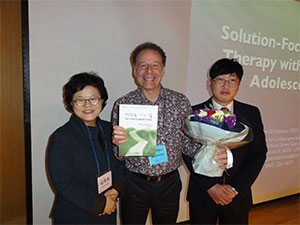
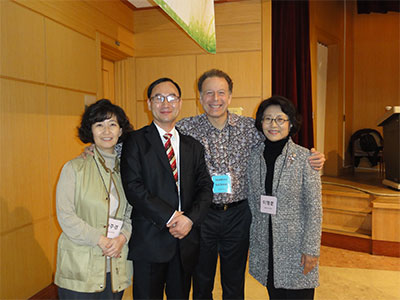
Matthew’s book Pathways to Change: Brief Therapy with Difficult Adolescents, Second Edition was just published in Korean. A copy was presented to me at my workshop in Seoul, which was hosted by the Korean Solution-Focused Brief Therapy Association.