 Partners for Collaborative Solutions
Solution-Oriented Brief Family Therapy with Challenging Children and Adolescents
Children and adolescents presenting with oppositional, school disruptive, aggressive and violent, eating-distressed, self-harming, substance-abusing, and aggressive and violent behaviors can be a nightmare for even the most seasoned of therapists to engage and retain in treatment. Many of these children and youth have experienced emotional invalidation and inconsistent or harsh discipline from their key caretakers, lack healthy support systems, and have had negative past treatment experiences. Former therapists, treatment program staff, and school personnel often refer to these children and adolescents as being “resistant,” “defensive,” “in denial,” “borderline,” and “antisocial.” It is no surprise why many of these children and youth would ask themselves prior to seeking our help or while sizing us up during their first encounters with us the following questions: “Why should I trust you?” “What can you do for me that will make a real difference with my painful life situation?” “How are you going to be any different then all of the other counselors I saw before you?”
In this “hands-on” practice-oriented two-day workshop, participants will learn a collaborative strengths-based brief therapy approach that taps the inventiveness and key strengths and resources of children and adolescents, their parents, key members from their social networks, and involved helping professionals from larger systems to co-construct solutions. Children and adolescents and their families are invited to define their goals, be the lead authors of their treatment plans and the new preferred stories they wish to author for themselves. The major emphasis with this optimistic and highly positive approach is on what is right with the child and adolescent, not on what is supposed to be wrong with him or her.
As a result of attending this “hands-on” practice-oriented workshop, participants will be able to:
- Create a therapeutic climate ripe for cooperation and change in the first family therapy session
- The Blueprint for Change Plan: A client outcome-informed roadmap to possibility land
- Utilize key client learning styles and strengths to empower them to resolve their difficulties
- Questions that elicit client expertise, curiosity, and untold stories
- Negotiating realistic, well-formed treatment goals
- The improvisational therapist: Practicing on the creative edge with challenging children and adolescents and their families
- Several effective engagement strategies
- Guidelines for selecting, tailor-making, and matching therapeutic experiments in line with the client’s theories of change, learning styles, key strengths, and treatment goals
- Using concerned peers, adult inspirational others, and other key members of the client’s social network in the treatment process
- Having transformative and solution-generating conversations with involved helping professionals from larger systems
- Covering the back door: Effective goal-maintenance tools and constructively managing inevitable client slips
The workshop format will combine information-rich didactic presentation, extensive use of videotape examples of major therapeutic strategies, live family therapy consultations, and skill-building exercises.
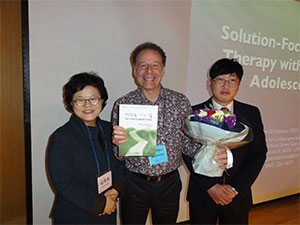
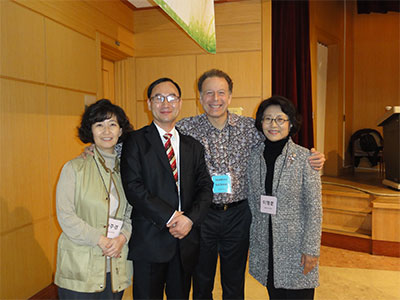
Matthew’s book Pathways to Change: Brief Therapy with Difficult Adolescents, Second Edition was just published in Korean. A copy was presented to me at my workshop in Seoul, which was hosted by the Korean Solution-Focused Brief Therapy Association.