 Partners for Collaborative Solutions
Through a direct link to Amazon.com, you can order any of the books listed below by clicking on the titles or cover you wish to purchase.
THE THERAPIST’S USE OF SELF: BEING THE CATALYST FOR CHANGE IN COUPLE AND FAMILY THERAPY
Matthew D. Selekman
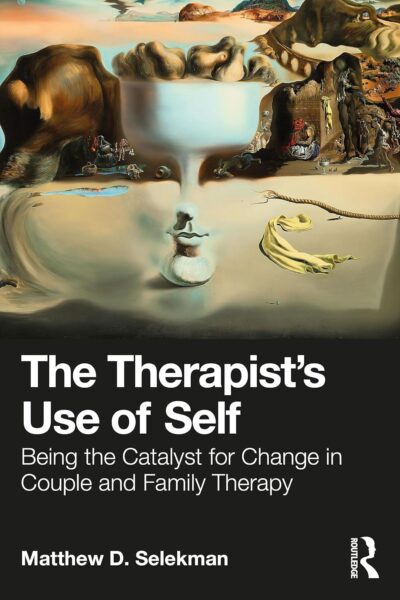 This book encourages and empowers students and practicing marital and family therapists to be more present and daring with their clients. Mental health professionals are often taught and trained that therapy is serious business, to be cautious and conservative with their therapeutic decision-making, and to stick to using empirically supported models and stay true to using the specific tools and strategies of those approaches. What gets lost in this positivistic, formulaic, and scientific way of working are therapists’ own unique voices, their creativity, flexibility, and the sense of playfulness that make the change process fun and upbeat. The Therapist’s Use of Self equips therapists with the skills they need to deepen their alliances with clients, to liberate themselves from an overreliance on models, and bring their whole selves to the therapeutic encounter. Chapters cover the philosophical
positions and the wisdom on the therapist’s use of self of ten master couple and family therapists; practical ways to expand our therapeutic range and style by bringing in ideas from such fields as art, film, theater, literature, philosophy, history, nature, science and technology, and practical troubleshooting guidelines for getting unstuck with challenging therapy veteran clients.
Jay Lebow says:
“Matthew Selekman’s brilliant new book is exactly what the field of relational and systemic therapies needs currently. Building on a clear vision of the use of self in therapy, he offers inventive frameworks for therapeutic decision-making and innovative ways to resolve problems. Filled with poignant clinical examples and the wisdom of a seasoned therapist who has supervised couple and family therapy around the world, this is a book every therapist in the field should read.”
WORKING WITH HIGH-RISK ADOLESCENTS: A COLLABORATIVE STRENGTHS-BASED THERAPY APPROACH
Matthew D. Selekman
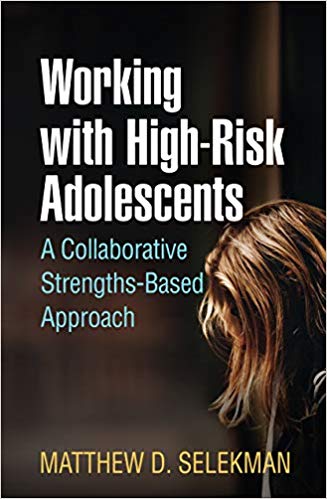 Many clinicians today are increasingly being referred high-risk adolescents coming from multi-problem families with extensive treatment histories. To further complicate matters, these youth and their families often have had years of involvement with helping professionals from larger systems who may be frustrated and pessimistic about the clients’ ability to comply with treatment and ever change. This book provides the perfect antidote, a highly practical, eco-systemic, and strengths-based integrative family therapy approach that targets interventions at the adolescent, family, social network, school, juvenile justice, and community levels. Carefully blending family therapy science with therapeutic artistry, this book provides therapists with a treasure trove of highly effective empirically supported and clinically evidence-based therapeutic tools and strategies for a wide range of serious adolescent emotional and behavioral difficulties.
Guy Diamond says:
“Selekman has done it again! He offers the reader an integrative client-centered therapy approach that is grounded in a long tradition of systemic and solution-focused therapies. We are given a front-row seat to observe a master therapist as he walks us through his own clinical cases to demonstrate his creative process. This book will surely inspire therapists to be more bold and adventurous in co-creating with family members a therapeutic experience that challenges and disrupts stagnant relational patterns and replaces them with new possibilities.”
Changing Self-Destructive Habits
Matthew D. Selekman and Mark Beyebach
 In this age of dysregulation, therapists are reporting worldwide seeing more clients presenting with multiple self-destructive behaviors and feeling at a loss for where to begin and what works with these clinically challenging situations. To further complicate matters, the clients’ couple partners, parents, or other family members may be grappling with self-destructive difficulties as well. This book provides a plethora of practical guidelines, therapeutic tools and strategies, client worksheets, and full length case examples for working effectively with these difficult clinical practice situations. The Collaborative Strengths-Based Brief Family Therapy treatment approach is applied to couples and families with self-injurious, eating-distressed, substance abusing, problem gambling, and excessive Internet and cyber-sex abusing difficulties. Unlike the narrow and more widely held traditional Twelve Step/disease model approach to these difficulties, the treatment methods espoused in this book are eco-systemic, based on Buddhist principles, are wellness-oriented and strengths-based, incorporate scientific research on what works in successful psychotherapy, and clients have the lead voice with treatment planning and goal-setting.
Michele Weiner-Davis says:
“If you feel stymied about how to help clients transform self-destructive habits into virtuous ones, this is just the book for you. Selekman and Beyebach demonstrate the similarities inherent in many self-destructive habits and offer an effective skeleton key for helping clients make life-altering changes. This is a must-read!”
Collaborative Brief Therapy with Children
Matthew D. Selekman
 In this engaging practice-oriented guidebook, cutting-edge strategies are presented for helping children and their families overcome a wide range of emotional and behavioral challenges. Vivid case material illustrates how to engage clients rapidly and implement interventions that elicit their strengths. Integrating concepts and tools from a variety of therapeutic traditions, a plethora of powerful therapeutic questions, family play and art therapy, narrative therapy, solution-focused, and positive psychology rituals and therapeutic experiments are discussed. The book highlights effective ways to promote spontaneity, fun, and new possibilities, especially with clients who feel demoralized and stuck in longstanding difficulties and entrenched patterns of interaction. Trouble-shooting guidelines are provided for getting unstuck with highly complex and challenging child treatment dilemmas.
Eliana Gil says:
“The books that truly captivate me are few and far between, and this one was compelling and immediately useful. Selekman embraces the creative imagination and puts it at the forefront of his work with families. I was particularly struck by his determination to engage children directly, give them a strong voice, and focus consistently on the family’s strengths. This book is fun and informative reading; I highly recommend it!”
THE ADOLESCENT AND YOUNG ADULT
SELF-HARMING TREATMENT MANUAL: A COLLABORATIVE STRENGTHS-BASED BRIEF THERAPY APPROACH
Matthew D. Selekman
 The first of its kind and comprehensive treatment manual for utilizing Collaborative Strengths-Based Brief Therapy with adolescent and young adult self-harming clients and their couple partners and families. The most up to date research findings on adolescent and adult self-harm are presented clearly that can inform clinical practice with this challenging treatment population. The treatment manual covers individual, couple, family, group, intensive outpatient, and school-based day treatment modalities. It is filled with many case examples and practical guidelines illustrating how to use the major therapeutic strategies and tools described in this book. Special treatment dilemmas with highly complex case situations and trouble-shooting guidelines also are presented.
Lynn Hoffman says:
“Matthew Selekman’s treatment manual is a big, chewy plumcake of a book. A grateful clinical audience can generalize from this book to almost any other dilemma. Selekman continually surprises us.”
WORKING WITH SELF-HARMING ADOLESCENTS:
A Collaborative, Strengths-Based Therapy Approach
Matthew D. Selekman
 In this revised and expanded paperback edition of Living on the Razor’s Edge: Solution-Oriented Brief Family Therapy with Self-Harming Adolescents, readers will find a new and highly practical preface that offers parents valuable guidelines for preventing and constructively managing their adolescents’ self-harming behavior and for strengthening their relationships with them. The innovative Stress-Busters’ Leadership Group, an eight-session skill-building group for self-harming adolescents also is presented in this book.
Bill O’Hanlon says:
“This book is not only on the razor’s edge of innovative, effective therapy—it is a cut above.”
Pathways to Change:
Brief Therapy with Difficult Adolescents Second Edition
Matthew D. Selekman
 In this revised and expanded second edition, readers will find a wide range of innovative therapeutic tools and strategies for creating possibilities with challenging adolescents and their families. Another unique feature of this book, is a mini-manual for running the Solution-Oriented Parenting Group.
Harlene Anderson says:
“The second edition of Pathways to Change takes Selekman’s integrative and strength-based therapy model for adolescents and their families to a new level. Offering numerous practical guidelines and clinical vignettes—and daring to be unconventional and sensible at the same time—Selekman invites readers to rethink the way they conceptualize adolescents and their problems, and provides new therapeutic tools for their repertoire. Practitioners at any level of experience will unquestionably benefit from Selekman’s experience, confidence, compassion, optimism, and down-to-earth manner. The richness of Pathways is immeasurable; you must read it yourself!”
FamilyTherapy Approaches with Adolescent Substance Abusers
Thomas C. Todd & Matthew D. Selekman
 Todd and Selekman present eleven different family therapy
approaches for treating adolescent substance abusers. Important family therapy research findings are also discussed in this book.
Don Efron says:
“Family Therapy Approaches with Adolescent Substance Abusers is a valuable addition to the field.”
HARTARSE, VOMITAR, TORTURARSE: LA TERAPIA EN TIEMPO BREVE
Giorgio Nardone & Matthew D. Selekman
 Two internationally renown clinical experts on self-destructive clients have joined forces to present a highly practical, empirically supported brief therapy approach for working with individuals, couples, and families presenting with serious difficulties with eating disorders and self-injury. The book is packed with a plethora of effective therapeutic tools and strategies. Full-length case examples are provided so that readers can have front row seats observing the challenges and the breakthroughs of working with these difficult treatment populations.
200 Tasks in Brief Therapy: Individual, Couple and Family Therapy
Mark Beyebach & Marga Herrero (2010)
200 Tareas en Terapia Breve Individual, Familiar y de Parejas
Barcelona: Herder
 This practice-oriented book offers a detailed description of over 200 different homework tasks that can be used with individual clients, couples, families and even groups. For each task, a brief summary in the form of small drawings is offered, providing the reader with instant and entertaining information on the scope, characteristics, and difficulty of the task. Each task is described and its possible uses are outlined; creative variations and elements to be careful about are also addressed. The initial and final indexes make orientation easy, so that readers can quickly spot tasks for the situation they need help with.
Jorge de Vega says:
“Beyebach & Herrero have written an enjoyable and extremely useful book, that many individual, couple and family therapists will keep in their offices as a valuable resource to use in their everyday practice. Stuck with a case? Nothing to offer your clients? A brief dive into “200 tasks” will bring up refreshing ideas that can be put into action immediately.”
How to Raise a Little Tyrant: An Anti-Self-Help Book for Parents of Children and Adolescents
Barcelona: Herder.
Cómo criar hijos tiranos. Un manual de anti-ayuda para padres de niños y adolescentes
Mark Beyebach & Marga Herrero (2013)
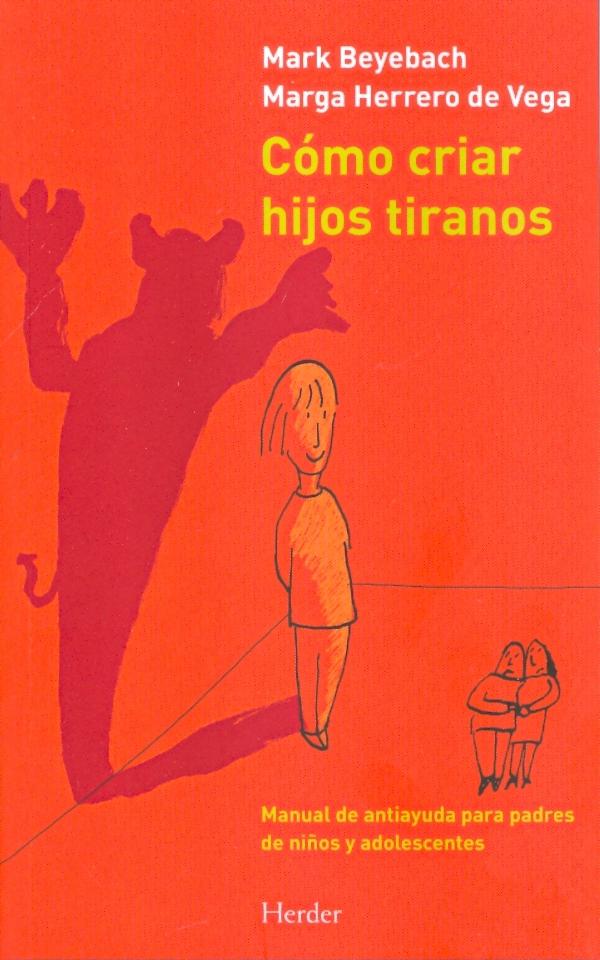 Written in the tradition and style of Paul Watzlawick´s How to Fail Most Successfully, this small and entertaining book offers paradoxical advice to parents. By explaining how to raise a domestic tyrant and consciously promote the aggressive behavior of children and adolescents, a number of important clues for responsible parenting are subtly offered. This funny, entertaining, and provocative text is intended as a “different” self-help book for parents, but is also a good read for family and child therapists.
24 Ideas for a Brief Psychotherapy
Mark Beyebach (2006)
24 ideas para una psicoterapia breve
Barcelona: Herder
 In this practice-oriented, hands-on book, 24 brief therapy techniques are discussed, including mainly solution-focused but also narrative and strategic tools: pre-treatment changes, miracle question, scaling questions, reframing, coping questions, use of compliments, deconstruction of no-improvement, problem pattern interruption, externalization, etc. Trans-theoretical procedures like handling the initial phone call, deciding whom to invite to the session, how to handle relapses, or how to terminate therapy are also covered. Each technique is briefly described and a clinical vignette is offered to exemplify its use. Possible difficulties are discussed, creative alternatives are shown, and research data are offered. Each chapter can be read independently, so that each reader can follow the order that suits him or her best.
Valentín Escudero says:
“No matter your theoretical orientation or the population you work with, if you are a therapist that has not lost his/her curiosity, who wants to add new and effective tools to your clinical work, and who wishes to connect your professional practice to the findings of psychotherapy research, you will find many reasons to read this book.”
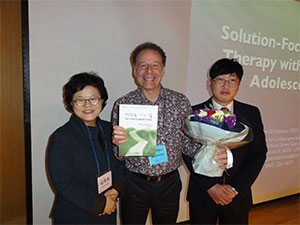
Matthew’s book Pathways to Change: Brief Therapy with Difficult Adolescents, Second Edition was just published in Korean. A copy was presented to me at my workshop in Seoul, which was hosted by the Korean Solution-Focused Brief Therapy Association.